EN
EN



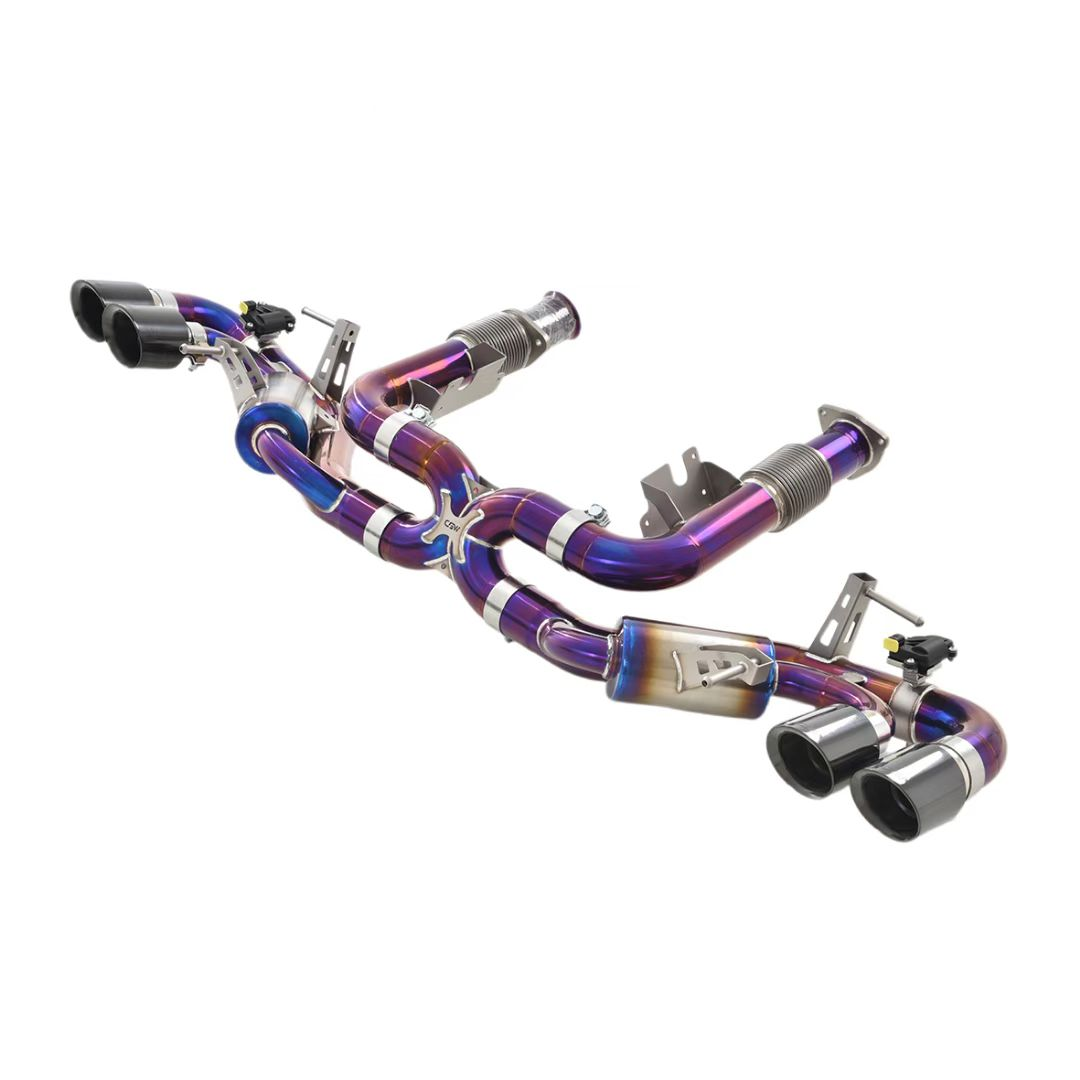
Vehicle Matching Reduces Installation Issues in Downpipe Production
Modern automotive exhaust systems require accurate fitting and reliable performance. Unlike universal exhaust components, vehicle specific downpipes are designed according to the structure, engine layout, and installation requirements of specific vehicle models.
Traditional generic designs often require additional adjustments during installation, which may increase assembly time and create compatibility issues. By using vehicle based development processes, manufacturers can optimize flange positions, pipe routing, mounting points, and connection dimensions before production begins.
For automotive distributors and aftermarket brands, vehicle specific downpipe manufacturing helps improve product consistency and provides a more reliable solution for different vehicle applications.
Digital Design and Modular Manufacturing Improve Production Flexibility
Advanced exhaust manufacturing relies increasingly on digital engineering methods. CAD systems, 3D modeling, and standardized component databases allow manufacturers to develop downpipe designs more efficiently.
Through modular design methods, engineers can reuse proven structures such as flange designs, pipe sections, and mounting solutions while adapting them to different vehicle platforms.
This approach helps manufacturers:
Improve development efficiency
Reduce repeated engineering work
Maintain consistent production quality
Support customized requirements from different customers
For OEM and aftermarket projects, flexible manufacturing systems make it easier to handle both regular production orders and customized vehicle applications.
Integrated Manufacturing Helps Shorten Downpipe Production Processes
A complete downpipe manufacturing process usually involves multiple steps, including material preparation, pipe forming, CNC machining, welding, surface treatment, and quality inspection.
When these processes are efficiently coordinated within one production system, manufacturers can better control production schedules and reduce unnecessary transportation or communication delays between different suppliers.
Integrated production also improves quality control because key manufacturing stages can be monitored under unified standards.
For buyers, this means more stable delivery performance and better consistency across production batches.
Quality Control Is Essential for Reliable Downpipe Manufacturing
Downpipes operate under high-temperature and high-vibration conditions, making manufacturing accuracy extremely important.
Professional manufacturers usually focus on several quality control factors:
Precise flange positioning
Accurate pipe dimensions
Reliable welding strength
Proper sensor and mounting compatibility
Leak inspection and appearance checking
These processes help ensure that finished downpipes meet installation requirements and maintain long-term durability.
For vehicle-specific applications, production accuracy is especially important because even small dimensional differences may affect installation performance.
Supporting OEM and Aftermarket Exhaust Projects
Vehicle specific downpipe production provides advantages for both OEM suppliers and aftermarket brands.
For automotive manufacturers, customized production supports different vehicle platforms and model updates.
For aftermarket companies, professional downpipe suppliers can provide:
Custom development support
Flexible order quantities
Vehicle-specific designs
Consistent manufacturing quality
Private label and branding solutions
A capable manufacturing partner can help businesses develop exhaust products that match market demand while maintaining stable production standards.
Choosing the Right Downpipe Manufacturing Partner
Selecting a reliable downpipe supplier requires evaluating more than production capacity. Important factors include engineering capability, manufacturing equipment, quality management, and experience with different vehicle applications.
A professional manufacturer should be able to provide complete support from design development to final production.
By combining vehicle-specific engineering, digital manufacturing, and strict quality control, downpipe manufacturers can deliver products that meet the requirements of global automotive markets.
FAQ
What is a vehicle-specific downpipe?
A vehicle-specific downpipe is an exhaust component designed for a particular vehicle model, engine configuration, and installation position to achieve better compatibility.
Why choose vehicle-specific downpipes instead of universal designs?
Vehicle-specific designs usually require fewer installation adjustments and can provide better fitting accuracy for targeted vehicle applications.
How does CAD technology help downpipe production?
CAD and 3D modeling help engineers optimize pipe routing, mounting positions, and manufacturing processes before production.
What quality checks are important for downpipe manufacturing?
Common inspections include dimensional checking, welding inspection, leak testing, and compatibility verification.
Can manufacturers provide customized downpipe solutions?
Yes. Many exhaust manufacturers support OEM, ODM, and customized production according to customer requirements.
Table of Contents
- Vehicle Matching Reduces Installation Issues in Downpipe Production
- Digital Design and Modular Manufacturing Improve Production Flexibility
- Integrated Manufacturing Helps Shorten Downpipe Production Processes
- Quality Control Is Essential for Reliable Downpipe Manufacturing
- Supporting OEM and Aftermarket Exhaust Projects
- Choosing the Right Downpipe Manufacturing Partner
- FAQ