EN
EN



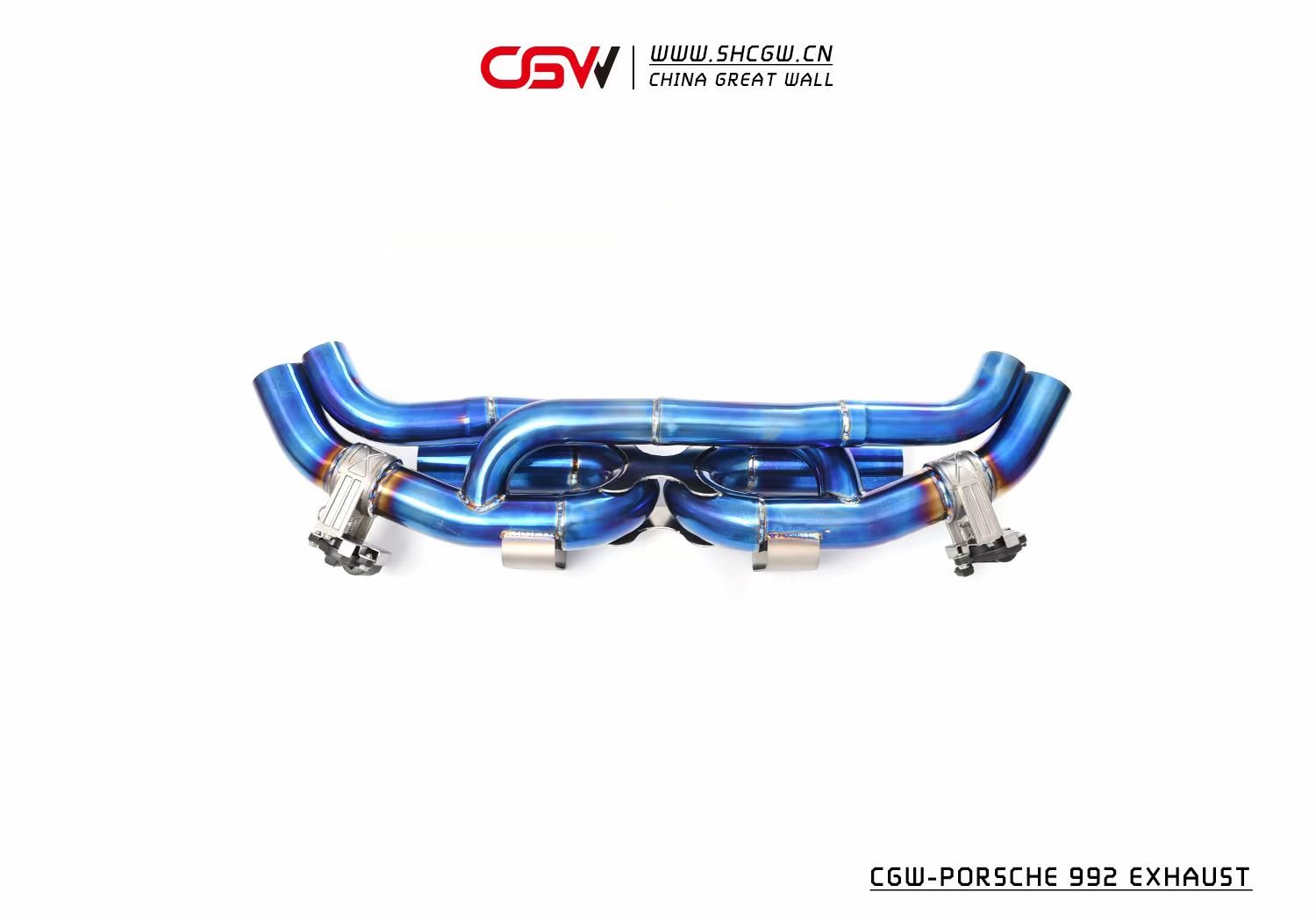
Valvetronic Exhaust Fundamentals: How Dynamic Valve Control Enables Structural Lightweighting
Traditional exhaust systems face an inherent design conflict: they must minimize backpressure for peak power while maximizing sound attenuation for comfort. This forces engineers to use large, multi-chamber mufflers and complex internal routing—adding significant mass. A valvetronic exhaust resolves this by integrating a dynamic valve that adjusts the exhaust gas flow path in real time. At low loads and idle, the valve routes gas through a full sound-dampening circuit. Under higher demand, it opens a more direct, less restrictive route—optimizing both flow and acoustics on demand.
This dynamic control is the key enabler for structural lightweighting. By eliminating the need for a single passive path to handle all operating conditions, the system’s architecture can be fundamentally simplified. Muffler designs no longer require oversized volumes or dense packing materials to manage worst-case noise scenarios. Engineers can specify thinner wall structures and remove entire internal baffles and chambers—directly cutting component mass. Studies show that moving from a passive multi-chamber design to a valve-controlled single-path system reduces baseline muffler weight by up to 30% before any material substitution. This architectural simplification establishes a lighter, more efficient structural foundation—making advanced material integration, such as titanium, a far more impactful weight-reduction strategy.
Titanium Alloy Advantages for Valvetronic Exhaust: Strength, Density, and Thermal Performance
Why Grade 5 Titanium (Ti-6Al-4V) Is the Optimal Material for High-Performance Valvetronic Exhaust
Grade 5 titanium (Ti-6Al-4V) delivers a unique balance of low density and high strength that directly supports valvetronic exhaust weight reduction goals. With a density of 4.43 g/cm³—roughly 43% lighter than stainless steel—it maintains tensile strength above 950 MPa, comparable to many steels. Its specific strength (~215 kNm/kg) is nearly double that of steel, enabling thinner wall sections for tubing and valve housings. In a valvetronic exhaust, electronically controlled butterfly valves must open and close rapidly under high thermal loads. Ti-6Al-4V’s high strength-to-weight ratio reduces the mass of moving components, enabling faster actuator response and less inertia-induced wear. Crucially, it retains mechanical integrity up to 550°C—well above typical peak exhaust gas temperatures—ensuring valve assemblies resist deformation and maintain calibration across repeated heat cycles.
Corrosion Resistance and Long-Term Durability in Real-World Exhaust Environments
Valvetronic exhaust systems face aggressive chemical attack from acidic condensates, moisture, and road salts—especially during cold starts and short trips. Unlike stainless steel, which often relies on protective coatings that degrade over time, titanium forms a stable, self-healing oxide layer that resists pitting and crevice corrosion. This barrier is highly effective against sulfuric and nitric acids formed in exhaust gas, protecting valve seats, shafts, and actuator linkages from scaling and sticking. Long-term testing shows negligible wall thinning in titanium components even after thousands of thermal cycles—eliminating corrosion-related failure modes like valve seizure or leakage. The result is consistent backpressure control and sound modulation over the vehicle’s lifetime, preserving performance benefits and reducing maintenance needs.
Quantified Weight Savings and Vehicle-Level Impact of Titanium Valvetronic Exhaust
Titanium valvetronic exhaust systems deliver dynamic sound control and remarkable weight savings versus conventional stainless steel units. Replacing dense steel with high-strength titanium alloy typically sheds 15–20 kg (33–44 lbs), directly reducing vehicle mass. This localized reduction—concentrated near the rear underbody—lowers the center of gravity and improves overall dynamics. Critically, the valvetronic mechanism adds minimal weight, preserving the net mass advantage.
Measured Mass Reduction: From Component-Level Gains to Handling and Acceleration Benefits
A direct comparison of a mid-size sports car’s exhaust system shows a stock stainless steel unit weighing 38 kg, while an equivalent titanium valvetronic system weighs just 22 kg—a 16 kg (42%) reduction. Every kilogram removed improves the power-to-weight ratio; for a 1,500 kg car, a 10 kg reduction cuts 0–100 km/h acceleration by ~0.1 seconds—so a 16 kg exhaust swap alone shaves ~0.16 seconds. Because the exhaust is mounted low in the chassis, this reduction also slightly lowers the center of mass and reduces load transfer during aggressive driving. Lower mass further improves braking distances and lateral inertia, enhancing cornering response. Beyond performance, a 10% vehicle weight reduction—as seen with a 150 kg saving on a 1,500 kg car—can improve fuel economy by 5–8% and extend electric vehicle range by over 13%, per findings published in the Journal of Minerals, Metals & Materials Society (JOM). Over 200,000 km, a 20 kg exhaust weight saving yields approximately $120 in fuel cost savings for a typical passenger car, according to Natural Resources Canada data.
Engineering Considerations and Best Practices for Implementing Valvetronic Exhaust in Titanium
While titanium delivers exceptional weight savings and thermal resilience, its unique physical properties demand revised engineering practices. Direct material substitution without redesigning supporting structures often leads to premature failure. Successful implementation therefore requires attention to thermal dynamics, structural mounting, and control system integration.
Thermal Expansion, Mounting Integrity, and Integration with OEM ECU/Exhaust Control Logic
Titanium’s coefficient of thermal expansion is roughly half that of common stainless steel—creating interfacial stress during heat cycling. Best practice uses flexible bellows or slip-fit connections to decouple the titanium exhaust from adjacent components, permitting independent movement without cracking. For mounting integrity, replicating steel hanger designs is insufficient. Titanium’s stiffness and fatigue resistance allow for thinner, lighter brackets—but welded joints must be stress-relieved to avoid cracking. Rigid mounting points should be isolated with vibration-damping elastomers to protect the system from drivetrain vibrations. Finally, integrating the valve actuator requires a clean interface with the OEM ECU. Control logic must be mapped to the actuator’s response curve to ensure seamless transitions between quiet and performance modes. Where native valvetronic support is absent, a dedicated controller can translate CAN bus signals—preserving factory driving modes without compromising functionality.
FAQ
What is a valvetronic exhaust system?
A valvetronic exhaust system uses a dynamic valve to adjust the exhaust flow path in real-time, optimizing sound and performance based on engine load and conditions.
How does titanium contribute to weight reduction in exhaust systems?
Titanium’s low density and high strength allow thinner wall sections and lightweight designs, reducing system weight by up to 42% compared to stainless steel.
Why is corrosion resistance important for valvetronic exhausts?
Corrosion resistance ensures long-term durability and prevents damage like valve seizure or leakage, preserving the system’s performance over its lifespan.
What are the benefits of reducing exhaust system weight at the vehicle level?
Reducing exhaust weight improves power-to-weight ratio, acceleration, handling, braking, fuel economy, and even electric vehicle range.
Are there special considerations for implementing titanium valvetronic exhausts?
Yes, implementation requires addressing thermal expansion, mounting flexibility, and seamless integration with the vehicle’s control system to ensure optimal performance and reliability.
Table of Contents
- Valvetronic Exhaust Fundamentals: How Dynamic Valve Control Enables Structural Lightweighting
- Titanium Alloy Advantages for Valvetronic Exhaust: Strength, Density, and Thermal Performance
- Quantified Weight Savings and Vehicle-Level Impact of Titanium Valvetronic Exhaust
- Engineering Considerations and Best Practices for Implementing Valvetronic Exhaust in Titanium
-
FAQ
- What is a valvetronic exhaust system?
- How does titanium contribute to weight reduction in exhaust systems?
- Why is corrosion resistance important for valvetronic exhausts?
- What are the benefits of reducing exhaust system weight at the vehicle level?
- Are there special considerations for implementing titanium valvetronic exhausts?